
Professional Care Guarantees
- Treatment by Certified MPT / BPT Doctors only.
- Advanced Modalify Equipment (Class 4 Laser, SWD, etc.)
- Home Visits available 7 days a week.
Rehabilitation Program
Medical Overview
Post-surgical and neurological recovery protocols.
Key Benefits
- Restores muscle power and coordination
- Achieves independence in daily activities
- Neuromuscular re-education and repair
- Corrects gait and balance disorders
- Personalized stroke recovery milestones
- Prevents muscle wasting (Atrophy)
- Intensive post-surgery rehabilitation
- Caregiver education and home setup
Clinical Benefits & Procedure
Long-term recovery plans for stroke, paralysis, and post-joint replacement surgeries.
Dr. Rakesh (MPT)
Director & Head Physiotherapist
Specialist in Advanced Pain Management & Sports Rehabilitation.
Educational Guide
Types of Physiotherapy
Understanding the different branches of physiotherapy helps you choose the right treatment for your condition.
Manual Therapy
Involves the therapist using their hands to manipulate, massage, and mobilize body tissues. Helps reduce pain and improve flexibility.
e.g. Joint mobilization, manipulation, myofascial release
Exercise Therapy (Therapeutic Exercise)
Specific movements prescribed to strengthen muscles and improve range of motion. The most common form of physiotherapy.
e.g. Stretching, strengthening exercises, balance training
Electrotherapy
Uses electrical energy to stimulate nerves and muscles. Highly effective for pain management and tissue healing.
e.g. TENS, IFT (Interferential Therapy), EMS
Heat & Cold Therapy (Thermal Therapy)
Uses temperature changes to treat injuries. Heat for chronic pain; Cold (Cryotherapy) for acute injuries to reduce swelling.
e.g. Hot packs, ice therapy, cryotherapy
Hydrotherapy (Aquatic Therapy)
Exercises performed in water. Buoyancy reduces joint load, making movement easier for arthritis or severe injury patients.
e.g. Pool-based rehabilitation, aquatic walking
Sports Physiotherapy
Designed specifically for athletes. Focuses on treating sports-related injuries and improving athletic performance through conditioning.
e.g. ACL rehab, sports taping, performance training
Neurological Physiotherapy
Focused on patients with nervous system disorders. Helps re-wire the brain-body connection for improved movement and independence.
e.g. Stroke rehab, Parkinson's, MS, spinal cord injuries
Geriatric Physiotherapy
Tailored for older adults. Addresses age-related issues like osteoporosis, arthritis, and balance disorders to prevent falls.
e.g. Falls prevention, joint mobility, osteoporosis care
Orthopedic Physiotherapy
Deals with the musculoskeletal system — bones, joints, ligaments, and tendons. Essential for post-surgical recovery.
e.g. Fracture rehab, ACL repair, knee replacement recovery
Cardiovascular & Pulmonary Physiotherapy
Focuses on patients with heart and lung diseases. Involves breathing exercises and guided physical activity to improve endurance.
e.g. Breathing exercises, cardiac rehab, COPD management
Comprehensive Post-Injury & Surgical Rehabilitation
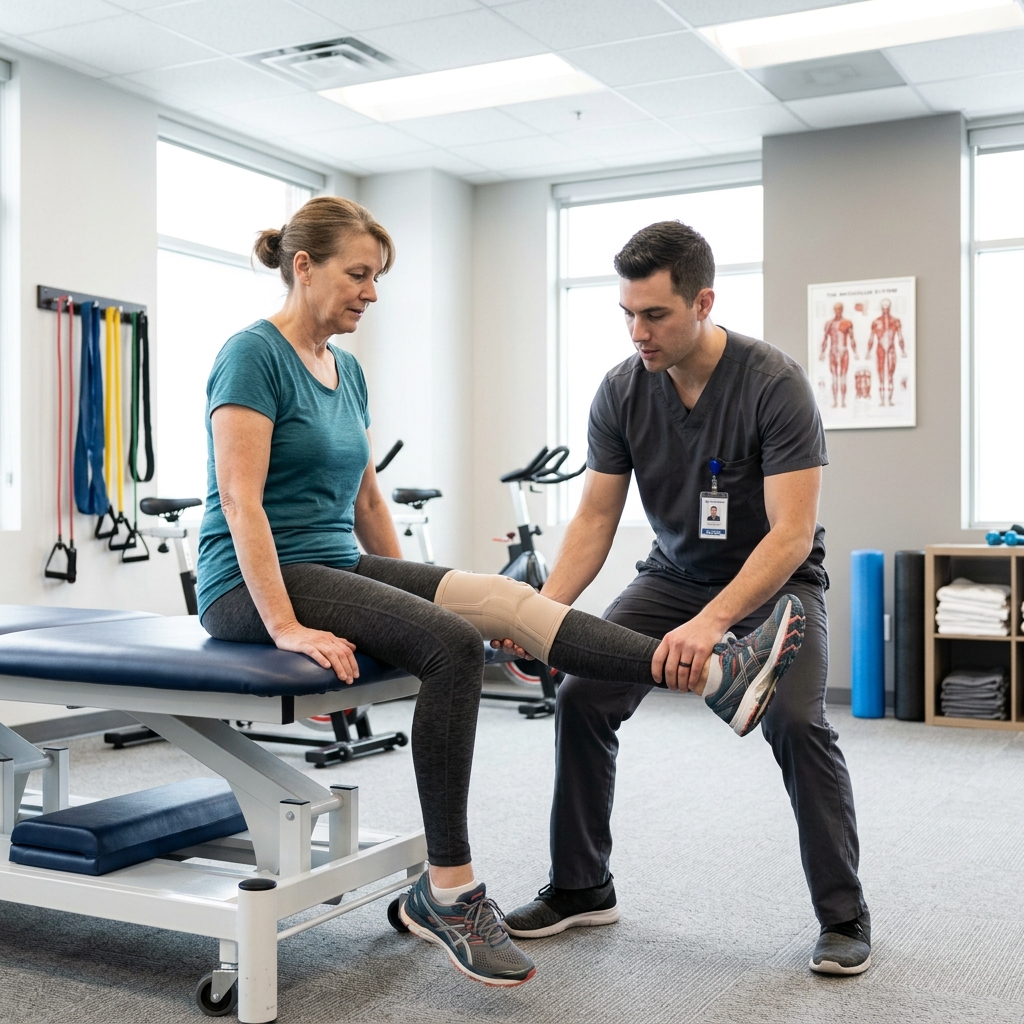
Surgery is only 50% of the battle; the remaining 50% is the Rehabilitation Program. Whether you've had a Knee Replacement, ACL reconstruction, or a Stroke, the way you move in the first 12 weeks determines your long-term success.Our program is designed by specialist doctors to ensure you regain not just movement, but 'Functional Independence'. We don't just give you exercises; we rebuild your confidence to walk, climb stairs, and return to your daily routine without fear.
Who Needs Structured Rehab?
Rehabilitation is essential whenever a major body function is lost due to trauma or disease.
- Post Total Knee/Hip Replacement
- Post ACL / Meniscus Repair
- Stroke & Paralysis Recovery
- Post-Cardiac (Heart) Surgery
- Spinal Cord Injury (Paraplegia/Quadriplegia)
- Parkinson's Disease Management
- Multiple Sclerosis (MS) Care
- Post-Fracture Stiffness
Rebuilding a human body takes time, patience, and professional guidance.
The Risks of Skipping Rehab
Without professional guidance, post-surgical patients often face:
- Permanent Joint Stiffness (Arthrofibrosis)
- Secondary injuries from poor walking patterns (Compensation)
- Muscle Atrophy (Thinning of muscles)
- Increased risk of falls and second fractures
- Long-term reliance on walking aids
- Chronic pain due to scar tissue tightening
Our Holistic Rehab Approach
Modern medicine offers several pathways to recovery. A combination of these is often the most effective.
Proprioception Training
Using balance boards and specialized tools to 're-teach' the brain where the limb is in space.
Gait Retraining
Analyzing your walking pattern in real-time to eliminate limps and ensure smooth weight transfer.
PNF Stretching
Advanced neuromuscular techniques to gain flexibility much faster than standard stretching.
Occupational Integration
Practicing the specific tasks you do at home or work to ensure a safe return.
The Four Phases of Rehab
Phase 1: Protection & Swelling reduction. Phase 2: Restoration of full Range of Motion. Phase 3: Progressive Strength training. Phase 4: Return to Sport / Return to Activity. Following these phases in order is the only way to avoid re-injury.
Personalized Exercise Plan
Contact us for a bespoke clinical assessment.
Success in Rehab
- Do your 'home program' exactly as prescribed.
- Keep an 'Exercise Diary' to track your progress.
- Focus on consistency, not intensity, in the early days.
- Celebrate the 'Small Wins'—like the first time you climb a stair.
Rehabilitation FAQs
Q. When should rehab start?
Ans. Often within 24-48 hours after surgery, starting with gentle bedside exercises.
Q. Is it painful?
Ans. There is some 'therapeutic discomfort', but we manage it with modalities like TENS and Ice.
Q. Can home visits work for rehab?
Ans. Absolutely. Home rehab is excellent for initial phases to ensure safety in your own environment.
Insights from
Dr. Rakesh (MPT)
Lead Physiotherapist & Director
"With over 8 years of advanced clinical expertise, Dr. Rakesh specializes in neurological rehabilitation and sports medicine. He has successfully treated over 5,000 cases of complex joint and spine issues using evidence-based practice and advanced clinical modalities."
Joined by 12+ other specialists